
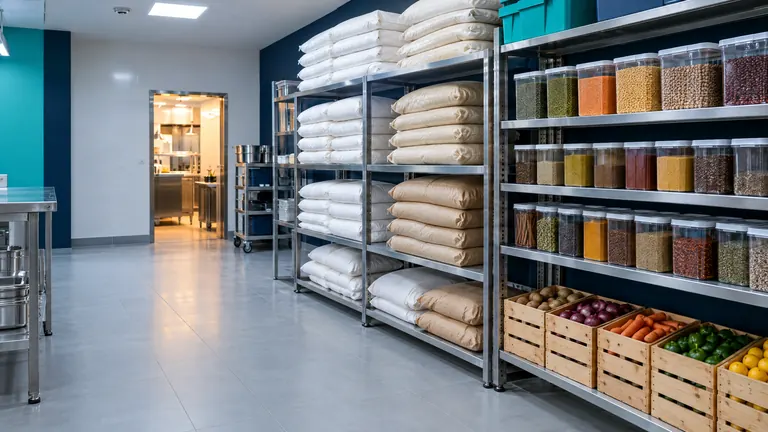
On this page
Quick answer: A restaurant stock take means physically counting all ingredients on hand and comparing them to what the system expected, revealing variance from waste, theft, or miscounts.
Run it section by section, freeze purchases during the count, assign one person per area, record every quantity - not just items you think are low - and investigate any gap you cannot explain immediately.
If your stock count is a once-a-month scramble that takes three hours and leaves you with numbers you do not fully trust, it is not working.
What is a restaurant stock take and why run one?
A stock take is a disciplined physical count of every ingredient in your kitchen, storage, and bar, compared against the quantity your system records. It is the check that tells you whether the number in your inventory system matches reality.
You run it because systems drift. Even a good restaurant loses track of exact stock through normal operations: a spill here, a substitution there, a delivery short by two kilos. The count closes the gap between the number and the truth.
How do you prepare for a stock take without disrupting service?
Preparation is what separates a productive count from a chaotic one. Three things to do before counting starts:
- Choose the timing. Run the count when the kitchen is closed or at its quietest - before opening, after the last service, or in the afternoon gap. Never mid-service.
- Freeze movements. Stop receiving deliveries and stop moving stock between areas until the count is done. If a delivery arrives mid-count, set it aside and record it separately.
- Assign areas. Give each counter a specific zone: dry store, main fridge, walk-in freezer, bar, prep fridge. Avoid having two people count the same area.
| Area | Items to count |
|---|---|
| Dry store | Flour, rice, sugar, canned goods, oils, spices |
| Main fridge | Dairy, fresh produce, opened containers |
| Walk-in freezer | Proteins, frozen goods by case and loose |
| Bar / drinks | Bottles by type, opened bottles measured |
| Prep fridge | Prepped ingredients, sauces, ready items |
What is the right way to count ingredients?
Count physically, not from memory. The discipline:
- Weigh what is sold by weight. If you buy chicken in kilos, count it in kilos - not in packs.
- Open partially-used containers. A bag of flour that is three-quarters full counts as its actual remaining weight, not a full bag.
- Count full cases separately from loose units. A full case of 12 × 500ml bottles is 12 units; three loose bottles is 3 units. Do not estimate.
- Label and date. If an item has no received-on date, note it - and add date labels as a habit going forward.
- Do not skip items that look full. A "full" container that has never been counted properly may be the source of your variance.
How do you record the count and calculate variance?
Once physical quantities are recorded, the system compares each count to the expected quantity and shows the variance. Variance is the gap - and the gap is information.
| Variance situation | What to do |
|---|---|
| Within 1-2% across most items | Normal; accept and move on |
| Large negative on one specific item | Investigate: waste, theft, over-portioning |
| Large negative across all items | Likely a counting or recipe error |
| Positive variance on several items | Delivery quantity may have been under-recorded |
| Recurring variance on same item weekly | Root cause has not been found; escalate |
Do not accept unexplained variance. Each gap has a cause, and every unexplained cause costs you money. Here is the count-to-variance routine in four steps:
From a count to an explained variance
Skip the step-by-step viewStep 1 of 4: Count while nothing moves
Count before opening or after close, one storage area at a time, with the same person doing the same shelf each week.
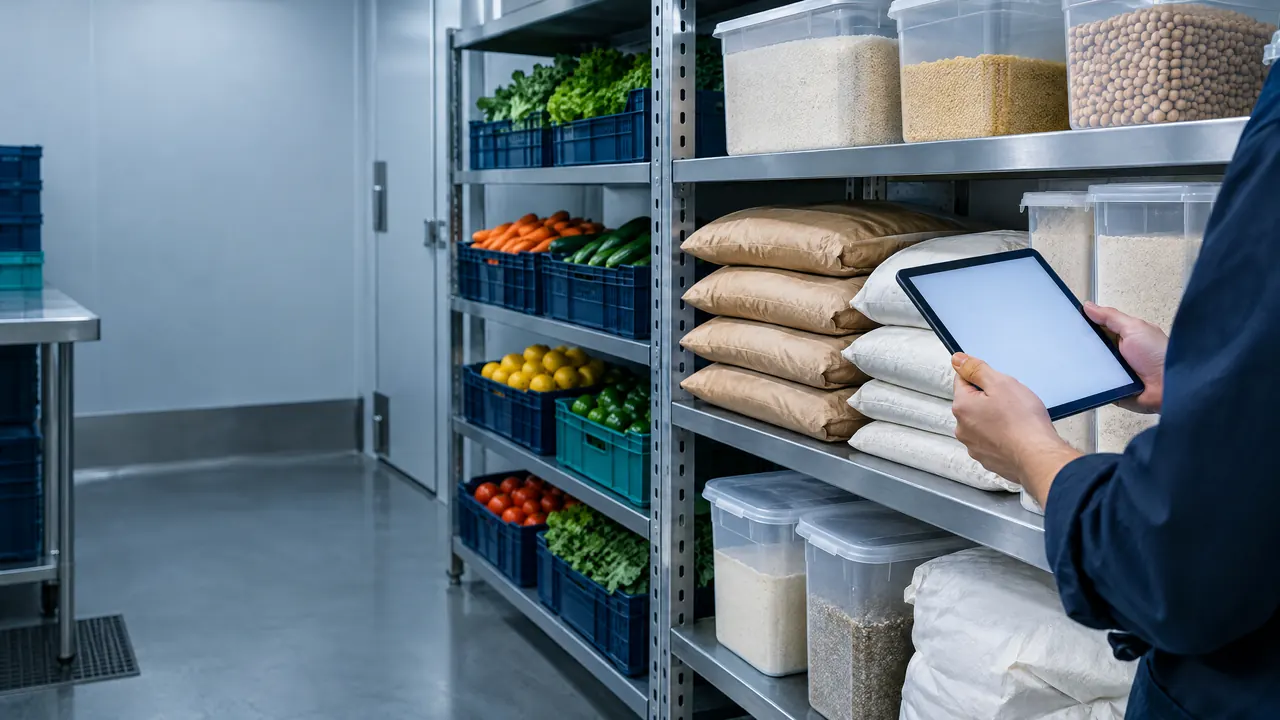
Walk-in, then dry store, then barWorked example
Step 2 of 4: Enter what is physically there
Record the physical quantity for each item as you go. TajerGo records physical counts by branch from the inventory screen.
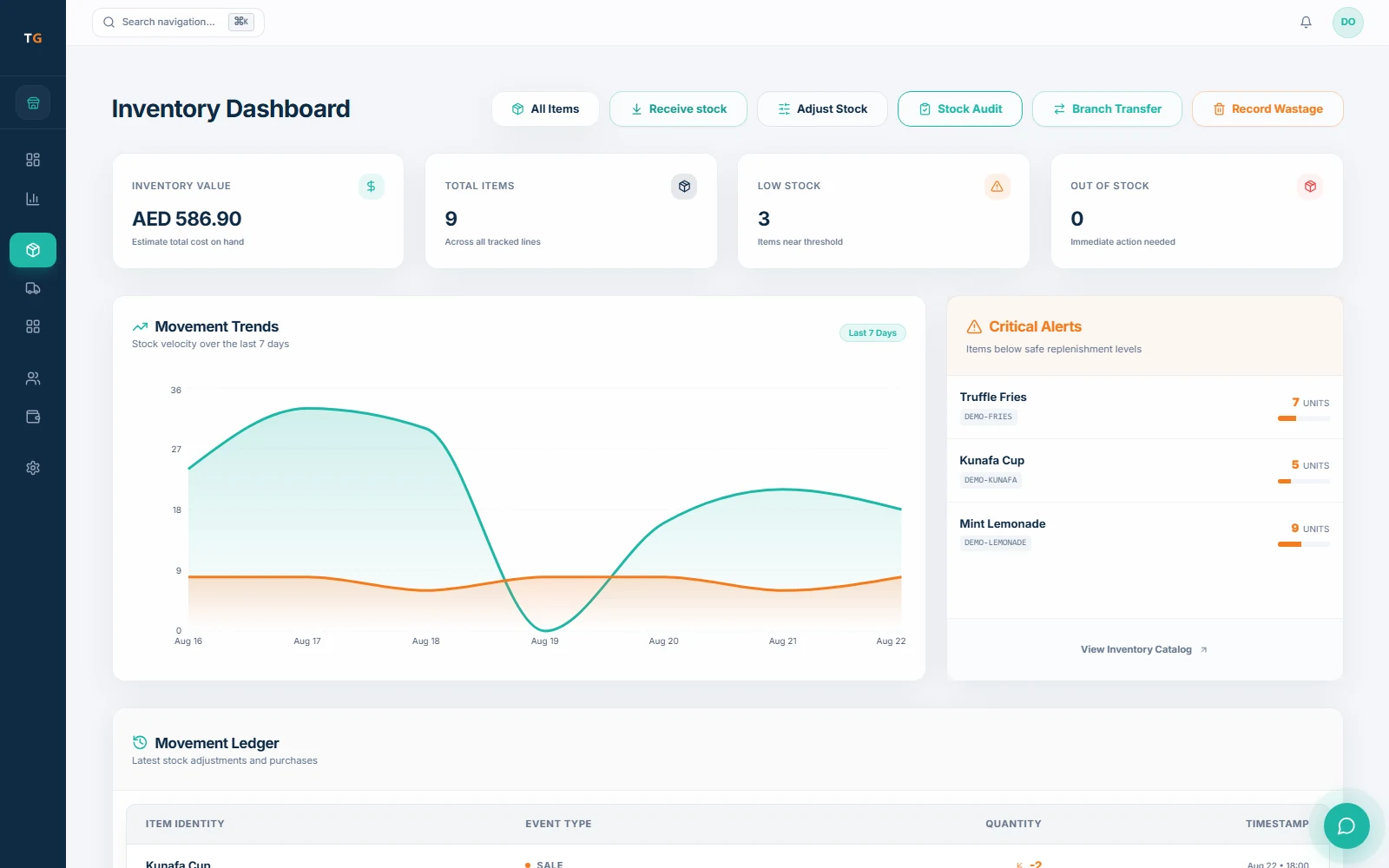
Stock audit startedDemonstration data
Step 3 of 4: Compare with expected
Variance is the physical count minus the expected quantity. A negative number means less stock than the records say.
Chicken: 16.5 kg - 18 kg = -1.5 kgWorked example
Step 4 of 4: Explain before you adjust
Check wastage records, deliveries, transfers and unit mistakes before accepting the adjustment. A variance alone does not prove theft.
Cause found: unlogged wastageWorked example
Product screens show demonstration data. Venue photos are illustrative.
Read the steps as text
Step 1: count when stock is not moving, before opening or after close, one area at a time. Step 2: enter the physical quantity for each item; TajerGo records physical counts by branch. Step 3: variance is the physical count minus the expected quantity, for example 16.5 kg counted against 18 kg expected is minus 1.5 kg. Step 4: check wastage records, deliveries, transfers and unit mistakes before you accept an adjustment; a variance alone does not prove theft.
How often should a UAE restaurant do a stock take?
The right frequency depends on your operation:
- Full count: Once per week for most restaurants. Monthly is too infrequent - a month's worth of variance is too hard to investigate.
- Section spot count: Daily for high-value proteins, seafood, and imported items that are both expensive and theft-prone.
- Bar count: Every shift change if alcohol is served.
With areas assigned and a team that knows the routine, a full count usually takes 45 to 90 minutes.
Read next: Restaurant inventory management UAE: the complete guide (pillar) · Stock variance: what it means and how to investigate it · How to track wastage in a restaurant kitchen · What is ghost inventory and how to find it
Frequently asked questions
How long does a restaurant stock take take?
A well-organised count of a single-branch restaurant typically takes 45-90 minutes when areas are pre-assigned and the system calculates variance automatically. Monthly counts that have not been practiced take much longer because the team is not in a routine.
Should I freeze deliveries during a stock take?
Yes. Any delivery received mid-count should be set aside and recorded separately after the count closes. Adding it mid-count creates confusion about what is being counted - stock already on hand or newly arrived stock.
What variance is acceptable in a restaurant stock take?
Up to 1-2% across most ingredient categories is within normal rounding and measurement error. Anything larger on a specific item, or variance that recurs on the same item each week, needs investigation.
Can my kitchen team run the count without the owner present?
Yes, if roles are clearly assigned and the system does the variance calculation. Assign section leaders to their own areas, and review the variance report yourself afterward. The system's audit log shows who entered what.
What happens to stock adjustments after a count?
After you commit a stock count, the system adjusts on-hand quantities to match the physical count. The variance is recorded with a timestamp and user, creating an auditable correction. This is not the end of the process - it is the starting point for investigating why the gap existed.
About this guide. Maintained by the TajerGo Editorial Team. Last updated 26 Sep 2026. Worked examples use illustrative numbers, not customer results.