On this page
Quick answer: Recipe costing means calculating the exact ingredient cost of every dish, allowing a restaurant to price for profit and see its true margin per menu item.
You break each dish into its ingredients, cost each at its purchase price per unit used, add them up, and compare the total to the selling price. Done for every dish, it reveals which items actually make money.
You can't price for profit without knowing what a dish costs to make, and "roughly" is not good enough on thin margins. This guide walks through the method step by step, in AED.
What is recipe costing?
Recipe costing is the process of calculating the precise ingredient cost of a single dish - its recipe cost or plate cost. It turns a menu item from a price you guessed into a known cost you can manage, and it's the foundation of both menu pricing and accurate food cost percentage.
What is a Bill of Materials?
A Bill of Materials (BOM) is the structured recipe behind a dish: every ingredient, with the exact quantity used. It's the same concept manufacturing uses for products, applied to your menu. The BOM makes costing repeatable: define it once, then re-cost it whenever an ingredient price changes.
For a coffee bar, the same recipe structure can connect beans, milk, syrups, cups, and lids to each configured drink. See the coffee-shop recipe-stock workflow for the operator view.
How do I cost a recipe step by step?
- List every ingredient in the dish, including oils, garnishes, and sauces (the small things add up).
- Note the quantity used of each, in the unit you buy it in.
- Find the cost per unit from your purchase price (e.g. AED 24/kg of chicken).
- Calculate each ingredient's cost for the portion used.
- Add them up for the total recipe cost.
- Compare to the selling price (net of VAT) to get the plate food cost percentage.
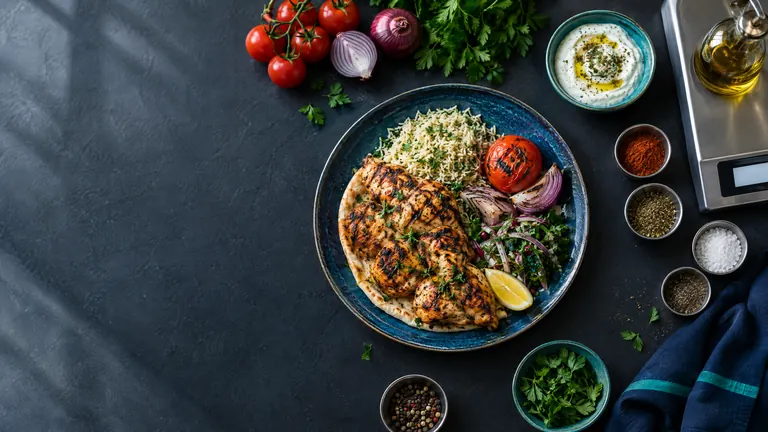
The walk-through below costs a plated chicken dish and prices it from a 30% target. The table after it costs a sandwich the same way.
Cost one plate, line by line
Skip the step-by-step viewStep 1 of 5: Weigh the real portion
Write the recipe as the kitchen actually plates it: every ingredient, with grams, millilitres or pieces.
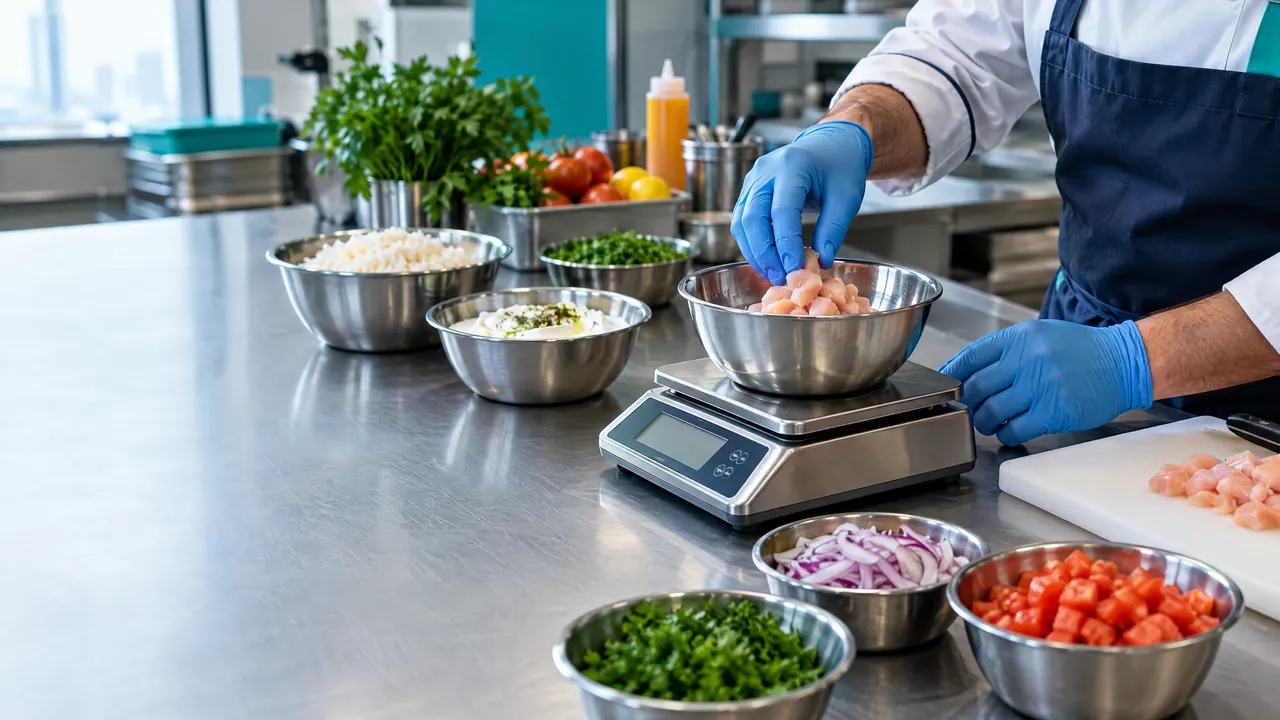
Chicken portion: 180 gWorked example
Step 2 of 5: Price every line
Multiply each quantity by its latest cost per unit. The TajerGo recipe screen shows the cost per unit and the line cost beside each ingredient.
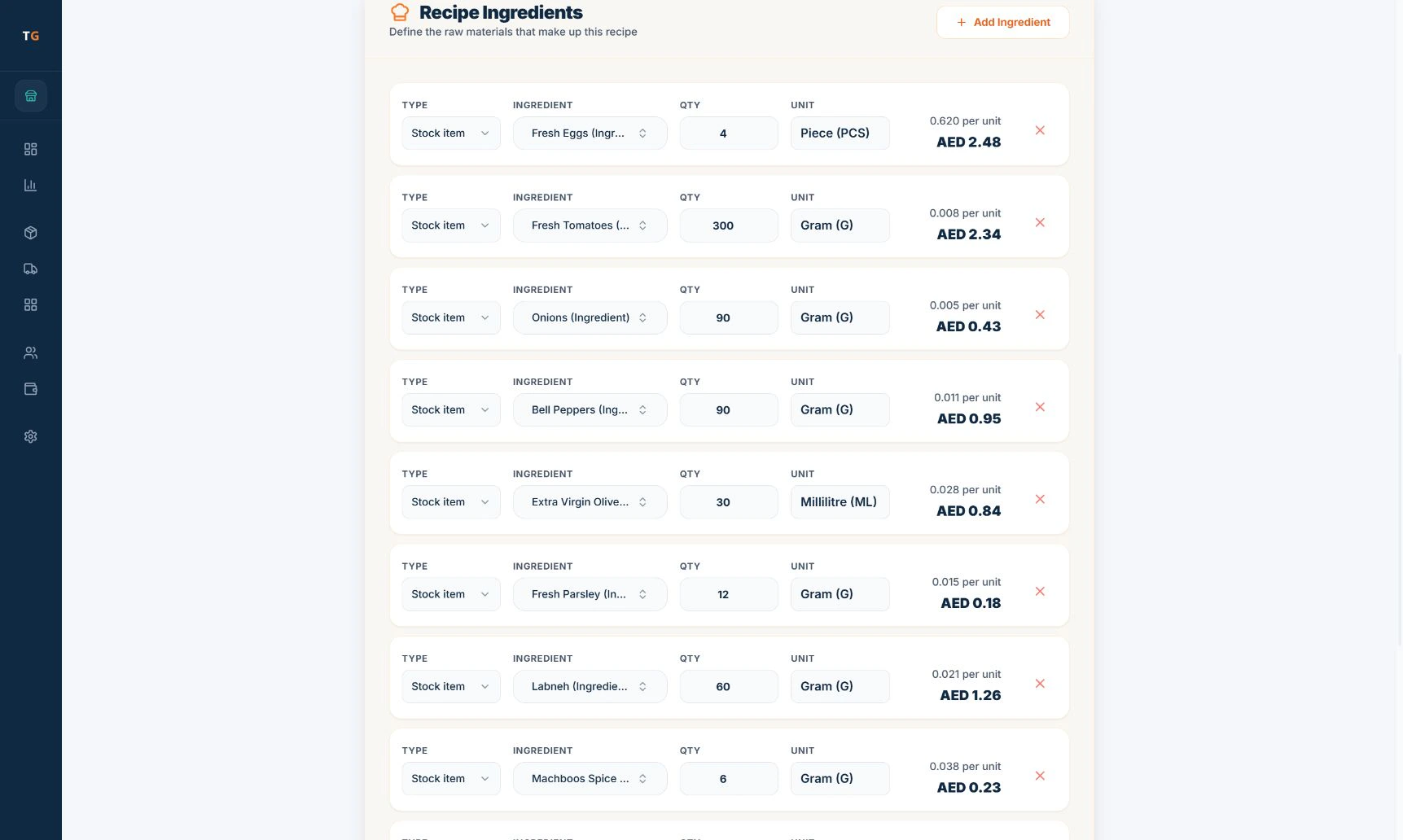
Tomatoes 300 g: AED 2.34Demonstration data
Step 3 of 5: Add up the plate
The plate cost is the sum of the lines. Add a small allowance for oil, garnish or packaging if every plate uses them.
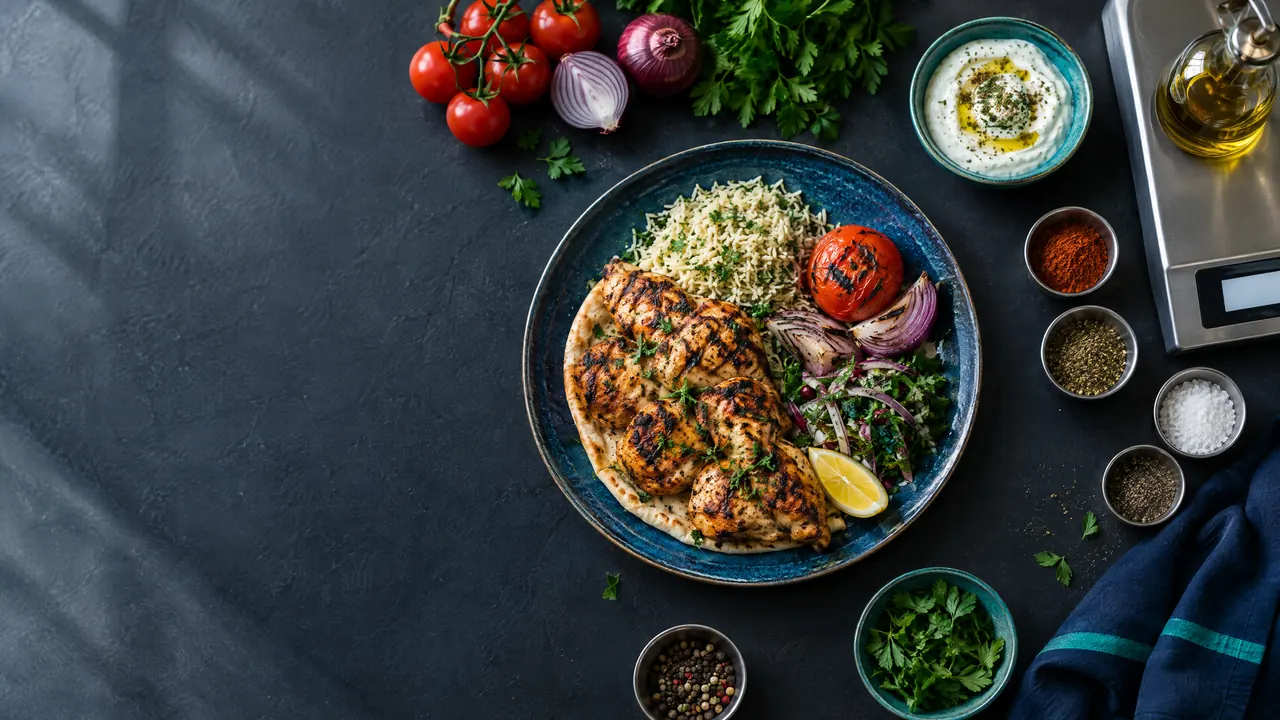
Plate cost: AED 9.60Worked example
Step 4 of 5: Price from your target
Divide the plate cost by your target food cost. AED 9.60 at a 30% target gives a menu price of AED 32.00 before VAT.
AED 9.60 / 0.30 = AED 32.00Worked example
Step 5 of 5: Check it after launch
Once the price is live, compare gross profit and margin by item in the reports library. A drift means the recipe, the portion or a supplier price changed.

Margin by itemDemonstration data
Product screens show demonstration data. Venue photos are illustrative.
Read the steps as text
Step 1: write the recipe as the kitchen plates it, each ingredient with its quantity. Step 2: multiply each quantity by its latest cost per unit; the TajerGo recipe screen shows cost per unit and line cost for each ingredient. Step 3: add the lines to get the plate cost, for example AED 9.60. Step 4: divide by your target food cost; AED 9.60 at 30% gives a price of AED 32.00 before VAT. Step 5: after the price goes live, check gross profit and margin by item in the reports library.
A worked AED example
A grilled chicken sandwich:
| Ingredient | Quantity used | Cost per unit | Cost |
|---|---|---|---|
| Chicken breast | 150 g | AED 24/kg | AED 3.60 |
| Bun | 1 | AED 1.20 each | AED 1.20 |
| Sauce & garnish | portion | - | AED 0.90 |
| Cheese | 1 slice | AED 0.80 each | AED 0.80 |
| Total recipe cost | AED 6.50 |
If the sandwich sells for AED 26 (net of VAT), the plate food cost is (6.50 ÷ 26) × 100 = 25% - healthy. Now you know, not guess.
Why does recipe costing matter?
Because without it, you're flying blind on your most important decisions:
- Pricing - you can't set a profitable price without knowing the cost.
- Margin visibility - you see the true profit on every dish.
- Cost control - when an ingredient price rises, you immediately see which dishes are affected.
- Menu decisions - costing reveals which items are worth promoting and which are quietly losing money.
How do I keep recipe costs accurate over time?
Recipe costs are only useful if they stay current, and a cost worked out six months ago may be wrong today. Link recipe costs to your latest purchase prices, so a rise in the price of chicken shows up in every dish that uses it. By hand this is tedious; in a system that already holds your purchase prices it is routine.
Read next: How to calculate food cost percentage (pillar) · How to price a menu item for profit · COGS for restaurants explained
Frequently asked questions
What is recipe costing?
Recipe costing is calculating the exact ingredient cost of a dish, so you can price it for profit and see its true margin. You cost each ingredient for the portion used and add them up to get the plate cost.
How do I cost a recipe?
List every ingredient and the quantity used, find each ingredient's cost per unit from your purchase price, calculate the cost for the portion used, add them up for the total recipe cost, then compare to the net selling price.
What is a Bill of Materials in a restaurant?
A Bill of Materials is the structured recipe behind a dish - every ingredient with its exact quantity. It makes costing repeatable, so the dish cost recalculates automatically when ingredient prices change.
How do I keep recipe costs accurate?
Link recipe costs to your live purchase prices so they update automatically when ingredient prices change. A cost calculated months ago can be wrong today, so keeping it current is essential for accurate pricing and margins.
About this guide. Maintained by the TajerGo Editorial Team. Last updated 26 Sep 2026. Worked examples use illustrative numbers, not customer results.