
Blog topic
Food Cost & Margin Control
Work out what each plate really costs, price it for a margin, and find where food cost drifts between the recipe and the bin.
Start here
The pillar guide for this topic
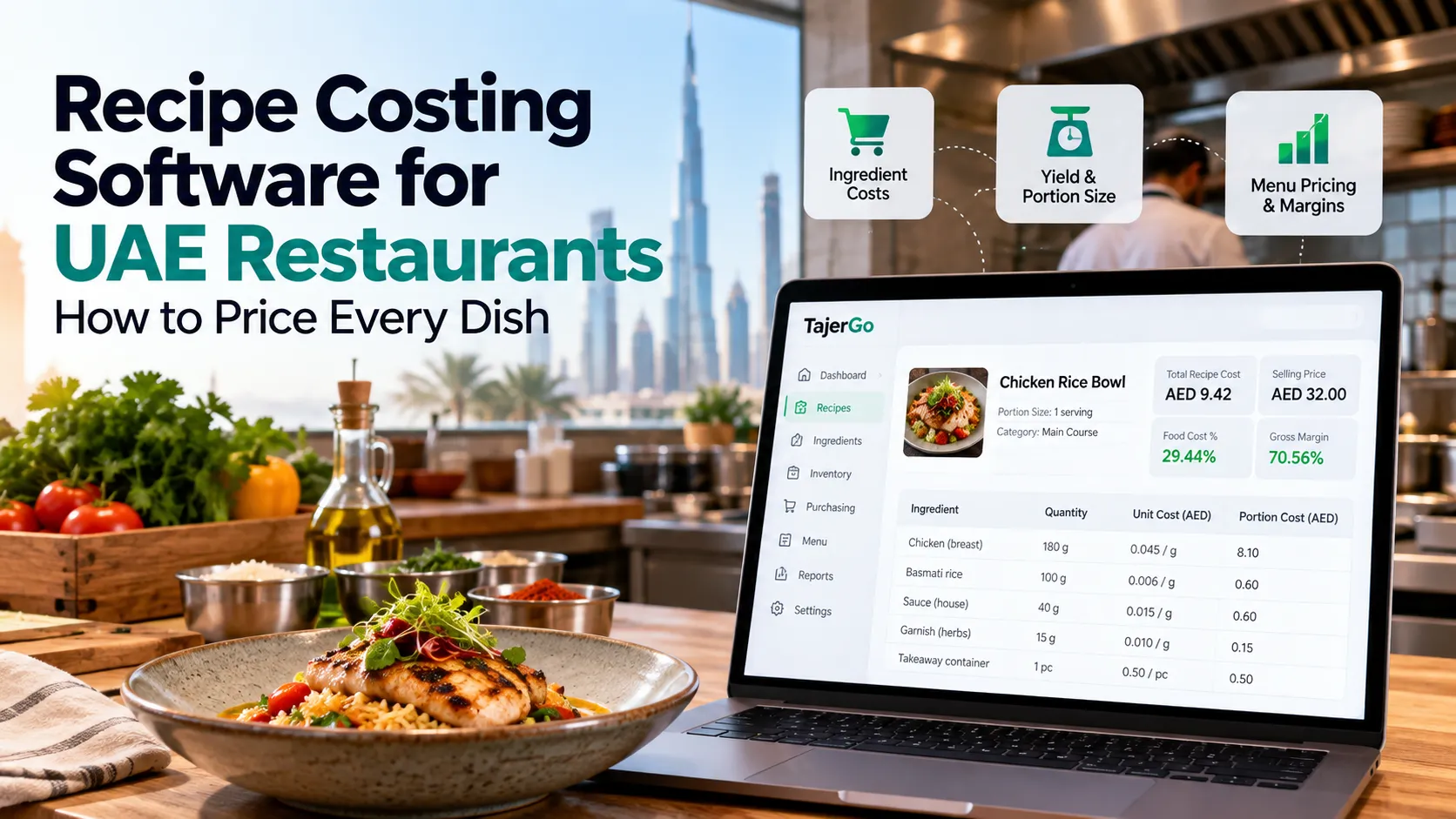
Recipe Costing Software for UAE Restaurants: How to Price Every Dish
Learn how UAE restaurants can calculate plate costs, account for yield and price every dish using connected recipe costing software.Read the guideWhat you will be able to do after this topic
- Cost a recipe line by line
- Set a menu price from a target margin
- Explain the gap between theoretical and actual cost
Food cost
Every guide in Food Cost & Margin Control
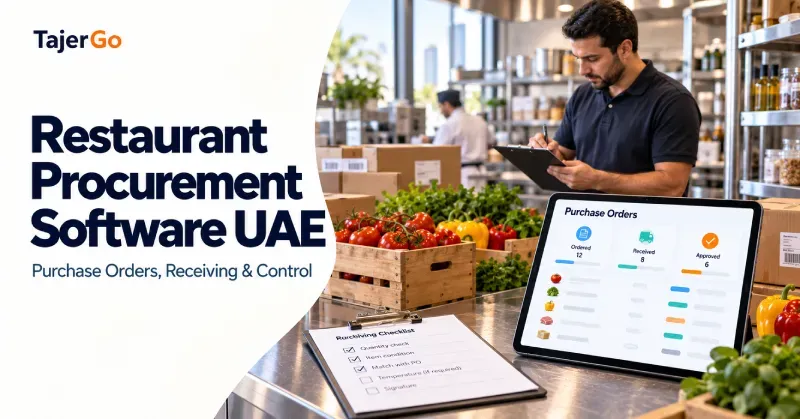
Restaurant Procurement Software UAE: Purchase Orders, Receiving and Control
Learn how UAE restaurants manage purchase orders, check deliveries, match supplier invoices and control ingredient spending with procurement software.Read the guide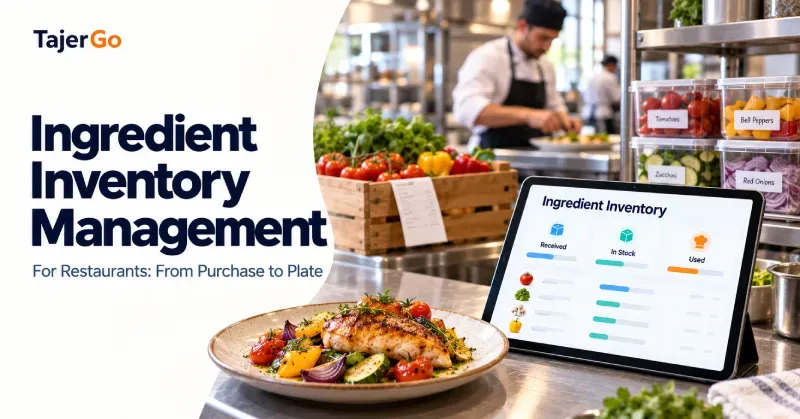
Ingredient Inventory Management for Restaurants: From Purchase to Plate
Learn how restaurants track ingredients from purchasing and receiving to prep, sales and stock counts, with practical inventory controls.Read the guide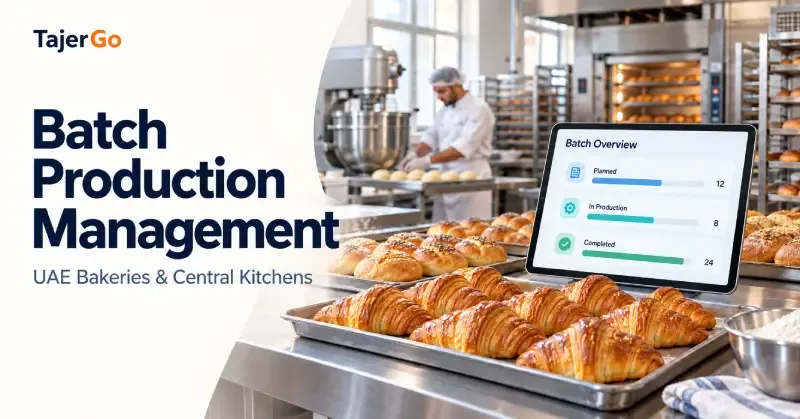
Batch Production Management for UAE Bakeries and Central Kitchens
Learn how UAE bakeries and central kitchens plan production batches, track ingredient use, compare yields and control costs across branches.Read the guide
COGS for Restaurants Explained in Plain Language
Cost of goods sold is the cost of ingredients used for the food you sold in a period. Here is what COGS means, how to calculate it, and why it matters.Read the guideHow to Cut Food Waste During Ramadan in Your Restaurant
Food waste spikes during Ramadan, especially at iftar buffets. Here is how UAE restaurants cut it with demand forecasting and buffet portion control.Read the guideWhat Is a Healthy Food Cost Percentage in the UAE?
A healthy food cost percentage for most UAE restaurants is 25-35%, but it varies by concept. Here are benchmarks for cafes, casual and fine dining.Read the guideThe Hidden Cost of Food Waste in UAE Kitchens
Food waste is lost profit on top of the labour, storage and disposal already paid for. Here is the true cost of waste in UAE kitchens and how to cut it.Read the guideHow to Calculate Food Cost Percentage for a UAE Restaurant
Food cost percentage is ingredient cost divided by sales, times 100. Here is the formula, a worked AED example and the healthy 25-35% target.Read the guideHow to Price a Menu Item for Profit in the UAE
To price a menu item for profit, start from its full ingredient cost, apply your target food cost percentage, then sense-check against the local market.Read the guideMenu Engineering: Which Dishes Actually Make You Money
Menu engineering classifies every dish by popularity and profitability, so you promote the winners, fix the underperformers and cut the losers.Read the guidePortion Control: The Fastest Way to Protect Your Margins
Portion control is the fastest way to protect restaurant margins, because over-portioning silently inflates food cost on every plate. Here is the method.Read the guideRecipe Costing for UAE Restaurants: A Step-by-Step Guide
Recipe costing means calculating the exact ingredient cost of every dish so you can price for profit. Here is the method with a worked AED example.Read the guideHow to Reduce Food Cost Without Lowering Quality
Cut restaurant food cost without hurting quality by tightening portions, cutting waste, renegotiating supplier prices and dropping low-margin items.Read the guideHow Rising Supplier Prices Erode Restaurant Profit (and How to Track It)
Small, unnoticed supplier price increases erode restaurant profit. Here is why they compound and how tracking invoice prices per ingredient protects it.Read the guideTheoretical vs Actual Food Cost: Closing the Gap
Compare theoretical and actual food cost on the same period and cost basis. Calculate the variance, then investigate waste, counts, transfers and recipe yields.Read the guide
Questions about this topic
Work out what each plate really costs, price it for a margin, and find where food cost drifts between the recipe and the bin. It has 16 guides for UAE restaurant, café, cloud kitchen and shop owners.
Try TajerGo
Put these guides to work in one POS
TajerGo is POS software for restaurants, cafés, retail and gifting businesses, with stock, suppliers and owner reports built in.
- Free plan at AED 0, no card needed.
- Paid plans from AED 99 per active branch per month, before VAT.
- Self-serve setup is free. Assisted setup packages are available.
- English and Arabic (RTL) interface.
Ask about your setup
Leave your details and the TajerGo team will get back to you about your menu, stock and branches.