
Recipe costing
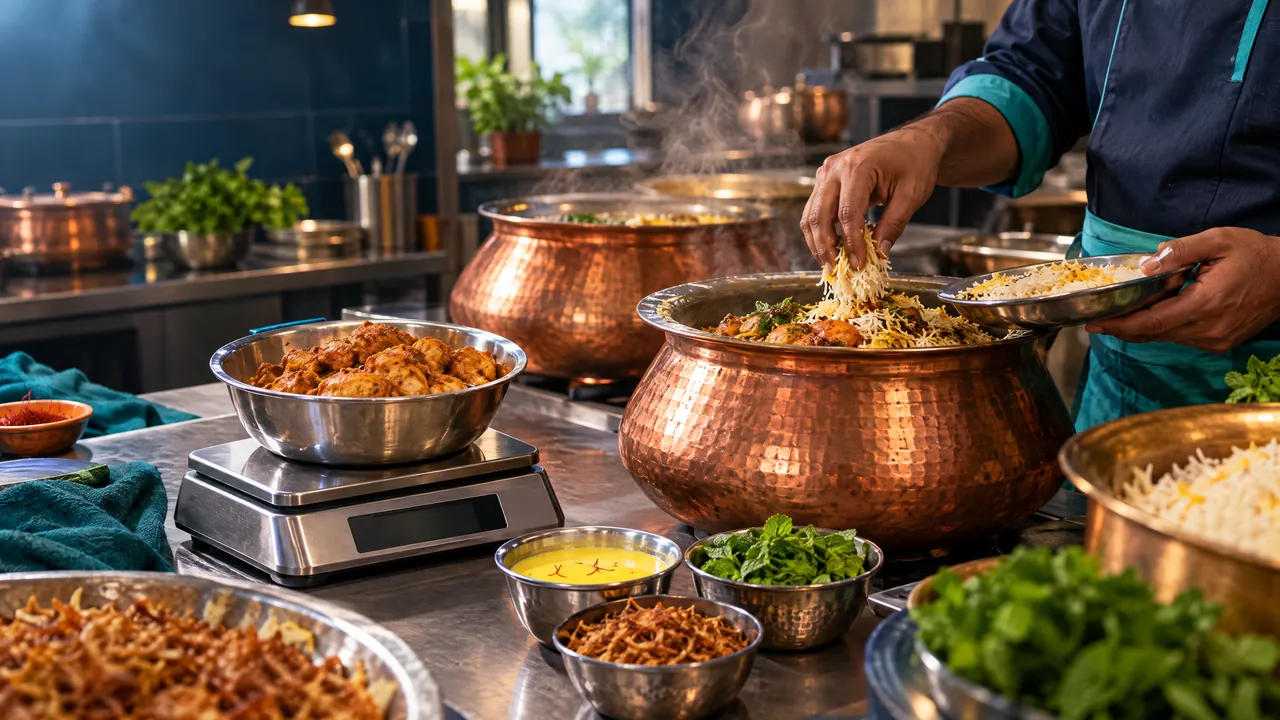
Know what a plate of biryani costs before you price it
Recipes hold each ingredient, its quantity and its yield, so the plate cost in rupees follows the latest purchase price. Bases such as gravy, masala and dough are planned as production batches and costed once.
Step by step
How it works
Write the recipe once
Rice, meat, curd, masala and garnish with quantities per portion.
Recipe costing, Restaurants & cafés Set the yield
A handi that serves twelve divides its cost by twelve, not by a guess.
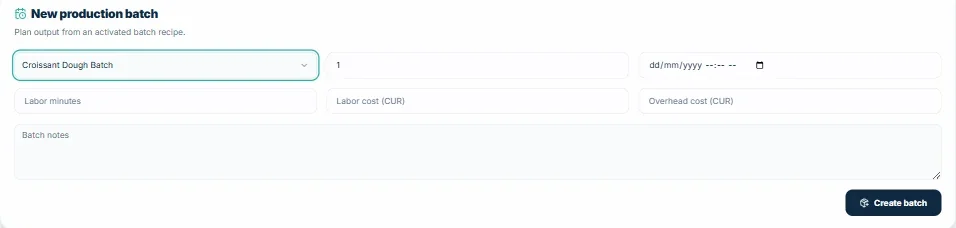
Recipe costing, Restaurants & cafés Batch the bases
Makhani gravy or biryani masala is planned as a batch and drawn down by the dishes that use it.
Demonstration data Price with the margin in view
When onion or chicken rates move, the plate cost moves with them.
Recipe costing, Restaurants & cafés
What you can do
Recipes and sub-recipes
Gravies and masalas used inside other dishes.
Yields and portions
Cost per portion from the batch size.
Production batches
Plan, issue materials and complete batches.
Theoretical usage
Expected consumption from sales, ready to compare with counts.
The connected loop
Connected to
Pricing
Plans and pricing
Frequently asked questions
Can a gravy be an ingredient of another dish?
Yes. A base recipe is costed once and used inside every dish that draws on it.
Where does the ingredient price come from?
From what you recorded when you bought it, so the cost follows real purchase prices.
Cost your menu dish by dish
Book a demo or start on the free plan.
Ask our team to call you
Leave your details and the TajerGo team will get back to you.